In brief
The cost of a modern villa is calculated by multiplying the built area by a cost per m² that depends on the level of finish, the land and the origin of the materials. Add a contingency margin and fees: it is this overall budget, and not just the price of the structural work, that you should compare between quotes.
“How much does it cost?” is the first question of every project owner, and the hardest to answer without a plan. In Ghana, Côte d'Ivoire or Togo, two villas of the same size can show very different budgets. Rather than announcing a single figure that would be wrong half the time, here are the levers that decide the final price and a simple method to get a first idea.
The 5 factors that make the budget vary
1. Size and shape
A compact plan costs less than a highly articulated one: more façades and roofing mean more material and labor.
2. Level of finish
Tiles, joinery, sanitaryware, false ceilings, home automation: finishes can make the cost per m² vary considerably.
3. The land
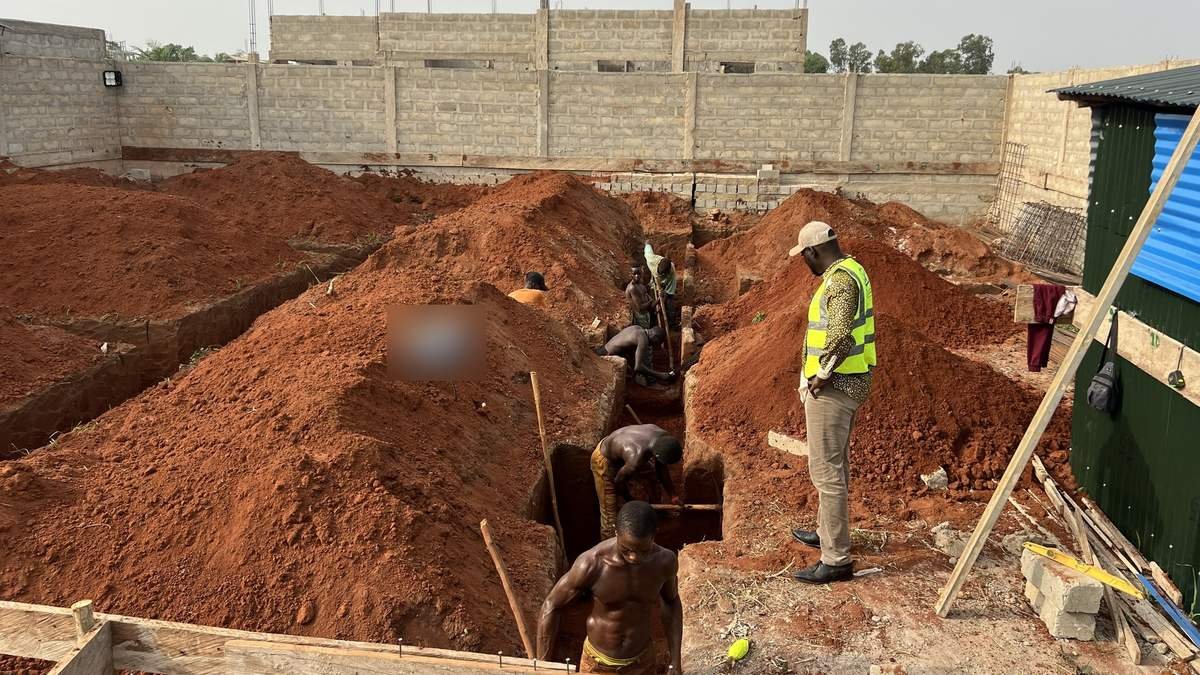
Slope, soil type, site access, availability of utilities: difficult land increases earthworks and foundation costs.
4. Materials
Imported materials cost more and expose you to exchange-rate swings and delivery delays.
5. Labor and supervision
Qualified contractors and rigorous supervision cost more upfront but avoid rework, which is often more expensive.
A simple method to estimate your budget
For a first estimate, think in three steps. It does not replace an architect's cost estimate, but it keeps you from arriving without any reference points.
- Define the built area, with or without terraces and garage, so you can compare equivalent quotes.
- Choose a level of finish (economy, standard or high-end) and ask several contractors for their cost per m² for that precise level.
- Add a contingency reserve, generally recommended in construction, as well as fees, taxes and permit costs.
Cost items not to forget
- Structural work: earthworks, foundations, structure, masonry, roofing. This is generally the heaviest item.
- Secondary works: electrical, plumbing, joinery, partitions, wall and floor coverings.
- Finishes: paint, tiling, sanitaryware, lighting, fitted kitchen.
- Outdoor works: fencing, gate, paths, drainage, borehole or utility connections.
- Additional costs: architect's fees, technical studies, building permit, insurance.
Mistakes that blow up a budget
The first is to start without complete execution drawings: every decision made during construction is paid at a premium. The second is to compare quotes that do not cover the same services. The third is to neglect site supervision: without oversight, quality and quantity discrepancies pile up. Finally, buying your materials without anticipating price and exchange-rate fluctuations can weigh heavily on a project lasting several months.
Frequently asked questions
How do you estimate a villa's budget before contacting an architect?
Multiply the desired built area by a cost per m² matching the target level of finish, then add a margin for contingencies and fees. An architect then refines this estimate after the sketch, once the program and the land are known.
Why does the cost per m² vary so much from one project to another?
The cost per m² depends mainly on the level of finish, the nature of the land (foundations, access, earthworks), the share of imported materials and the complexity of the plan. Two villas of the same size can therefore have very different budgets.
Does an architect really save you money?
Yes, in most cases: by optimizing plans, choosing materials suited to the climate and monitoring execution, the architect limits design errors and site rework, which are among the leading causes of budget overruns.
A project in mind?
BLEAZ Architecture helps you frame your budget from the sketch stage and stick to it through to delivery.
Let's discuss your project